AI consulting for enterprises: how to choose and where to start
41.9% of Brazilian companies already use AI. But most are stuck between the pilot and real operations. The right consultancy accelerates this path. The wrong one wastes budget and time.
IBGE confirmed: 41.9% of Brazilian companies with 100 or more employees already use artificial intelligence in their operations. In 2022, it was 16.9%. The growth is real. But scaling AI from a pilot to an operation that delivers P&L results remains the biggest challenge.
This is the gap where AI consulting operates. Not as a tool vendor, but as a partner that translates technological potential into operational impact. Distrito defines AI consulting as a company that helps organizations plan, implement, and scale AI, operating at the strategic and organizational level — not just the technical one.
The problem: not every AI consultancy delivers this. Most deliver reports. This guide shows how to separate the ones that generate results from the ones that generate cost.
US$ 3.4 bn
spent on AI in Brazil in 2026
IDC/Capital Aberto
41.9%
of BR companies with 100+ employees use AI
IBGE, 2026
80%
of AI projects fail before scaling
RAND Corporation
What an AI consultancy should deliver — and what most deliver
Peers Consulting observes that AI consulting inverts the traditional priority: instead of “technology first,” it puts business pain points in focus. When done well, it covers four interdependent deliverables: diagnosis with projected ROI, implementation in real production, internal team training, and results monitoring for 90 days.
In practice, most consultancies stop at the first two deliverables — and many stop at the first. The most common pattern: an 80-page opportunities report, a 3-month proof of concept with clean data, and a handoff without knowledge transfer. The result is a technically correct project that never operates in production, because no one prepared the data, the team, or the governance.
MIT documented that 95% of generative AI pilots don’t generate revenue acceleration. RAND Corporation reports an 80% failure rate for AI projects — double that of conventional IT projects. The cause is almost never the technology. It’s the distance between the consultancy that diagnosed and the operation that should execute.
“The most expensive AI consultancy isn’t the one that charges the most. It’s the one that delivers a nice report and leaves you alone to implement.”
The 5 criteria for evaluating an AI consultancy
Before comparing proposals, apply these five criteria. They separate consultancies that generate results from those that create dependency. Each criterion comes with a question you should ask in the first meeting.
Does it diagnose before selling a solution?
Good sign
Maps processes, surveys costs, projects ROI. Only then proposes implementation.
Red flag
Shows up with a defined tool and closed scope before understanding the operation.
Ask in the first meeting
“What was your diagnosis process for the last 3 clients?”
Does it deliver production results or just POCs?
Good sign
First agent in production in 4-8 weeks, with real operational metrics.
Red flag
3-6 month pilot with clean data that never scales to the real environment.
Ask in the first meeting
“How many of your projects are in production today — not in pilot?”
Does it transfer knowledge or create dependency?
Good sign
Trains the internal team to operate and evolve the solution autonomously.
Red flag
Delivers a closed solution, charges monthly support, documents nothing.
Ask in the first meeting
“What is the knowledge transfer plan for our team?”
Does it understand your industry or is it generic?
Good sign
Has cases in your industry, understands specific pain points, speaks the business language.
Red flag
Applies the same framework for retail, manufacturing, and services without adaptation.
Ask in the first meeting
“Which clients in my industry have you served and what results did you deliver?”
Does it measure real adoption or declare success at go-live?
Good sign
Tracks effective usage metrics for 90 days. Measures whether the team actually uses it.
Red flag
Delivers the system, runs 1-day training, and considers the project closed.
Ask in the first meeting
“How do you measure whether the team adopted AI in daily work — not just in training?”
Red flags: when the consultancy will cost more than it saves
Gartner warns that only about 130 of the thousands of vendors presenting themselves as agentic AI providers are real. The rest practice “agent washing”: renaming chatbots, scripts, or simple workflows as “AI agents.” The same happens with consultancies. These are the signs that the consultancy will generate cost, not results:
Red flags — stop the conversation if you identify these
Sells a tool before asking which process to automate
Doesn’t ask about data quality before proposing a solution
Promises specific ROI without having diagnosed the operation
Has no outcome metrics from previous clients to share
Charges per trained model or tokens consumed, not operational results
Doesn’t mention team adoption as part of the project
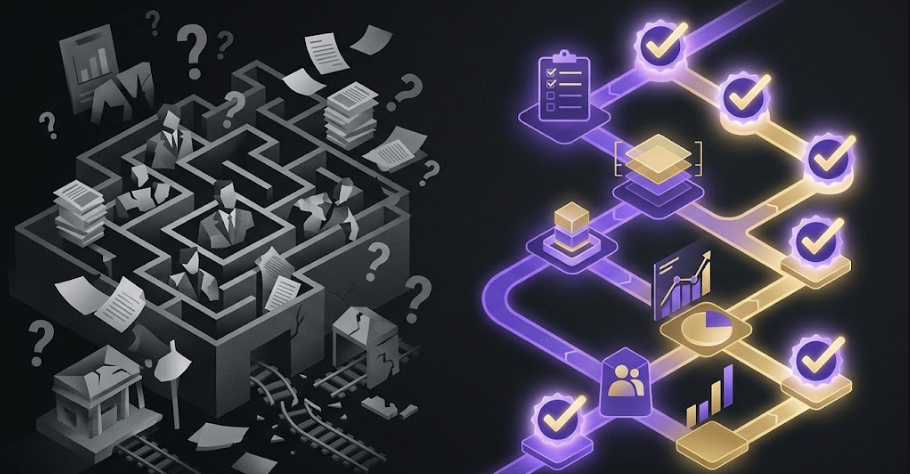
Consultancy that delivers reports
80-page report with opportunities
3-month POC with clean data
Handoff without knowledge transfer
Success declared at go-live
Dependency for any evolution
Consultancy that delivers operations
Diagnosis with projected ROI per process
Agents in production in 4-8 weeks
Team trained to operate autonomously
Real adoption metrics for 90 days
Independent evolution with solid foundation
The AI consulting market in Brazil in 2026
AI implementation spending in Brazil is expected to exceed US$ 3.4 billion in 2026, maintaining growth above 30% per year, according to IDC. The Brazilian government announced R$ 23 billion for the Brazilian AI Plan through 2028. Demand for specialized consulting follows this growth.
The market is divided into three groups. The big four and global consultancies (EY, Deloitte, Accenture, IBM) offer scale and methodology, but with high cost and focus on large corporations. The AI-native consultancies (Distrito, beAnalytic, Zappts, Visibilia) bring specialization and agility, but not all cover the complete cycle from diagnosis to adoption. And the technology consultancies that added AI to their portfolio, often without the necessary depth.
The persistent gap: most consultancies deliver strategy or technical implementation. Few go as far as data organization, production performance measurement, and ensuring real team adoption. This is where OORT Labs positions itself: a DATA & AI-First consulting and platform that covers from diagnosis to operational results.
Where to start: 3 questions before hiring
Before evaluating consultancies, answer three questions internally. If you don’t know the answer, that’s the first deliverable the consultancy should produce — and a good quality test.
1. Which process generates the most cost, errors, or rework in my operation? The answer defines where AI generates the most impact. Without it, any implementation is a gamble. The AI Assessment answers this question with data, not intuition.
2. Is my data for this process accessible and structured? IBGE may say that 41.9% of companies use AI, but IBM estimates that 73% of enterprise data is never used for analysis. If your data is in silos, the AI-First Data layer is a prerequisite before any agent.
3. Is my team prepared to work with AI on a daily basis? Deloitte identifies that companies with formal adoption programs have an 80% success rate. Without it, the best technology becomes shelfware. We wrote about how to build the business case to bring this decision to the board.
The right consultancy doesn’t sell AI — it delivers operations
The Brazilian AI market grows above 30% per year. Demand for consulting follows. But market growth doesn’t mean quality of supply. Most AI consultancies in Brazil still operate on the “report + POC” model that leaves the company alone when it’s time to scale.
The right consultancy diagnoses before selling, delivers results in production (not in slides), trains the team to operate autonomously, and measures success by operational metrics — not by trained models or tokens consumed. If your current consultancy doesn’t cover these four points, the problem may not be AI. It may be the partner.
Read also
Want a diagnosis before hiring?
The AI Assessment maps your processes, projects ROI, and delivers the implementation roadmap. Before choosing a consultancy, know exactly what needs to be done.
Schedule an AssessmentSources
- IBGE — 41,9% das Empresas Brasileiras Usam IA em 2026
- IDC/Capital Aberto — Gastos com IA no Brasil Superam US$ 3,4 bi
- Plano Brasileiro de Inteligência Artificial — R$ 23 bi até 2028
- RAND Corporation — 80% dos Projetos de IA Falham
- MIT — 95% dos Pilotos de IA Generativa Não Geram Receita
- Gartner — 40% dos Projetos de IA Agêntica Serão Cancelados
- McKinsey — State of AI 2025
- Deloitte — Tech Trends 2026: AI Adoption
- Distrito — Consultoria de IA: O Que É e 6 Principais em 2026
- Peers Consulting — Consultoria em IA: Quando Faz Sentido
Frequently asked questions
An AI consultancy helps companies plan, implement, and scale the use of artificial intelligence in their operations. It goes beyond technology: it involves process diagnosis, data organization, agent implementation in production, and team preparation for adoption. According to Distrito, AI consulting operates at the strategic and organizational level, not just the technical one.
Costs vary by scope and complexity. Diagnosis projects (assessment) start in the R$ 30,000 to R$ 80,000 range. Complete implementations with agents in production range from R$ 100,000 to R$ 500,000+. What matters most isn’t the absolute cost, but the projected ROI: companies with structured implementation report payback between 3 and 9 months.
Three signs indicate it’s time: (1) you know AI can help but don’t know where to start, (2) you’ve already tried implementing AI internally and the results didn’t appear, (3) your data is disorganized and you don’t know how to structure it for AI. If any of these scenarios applies, professional diagnosis prevents months of directionless experimentation.
A tool solves a specific task (e.g., chatbot, text generation). Consulting solves the business problem: identifies which process to automate, organizes data, implements the solution in production, and ensures the team adopts it. RAND Corporation documents that 80% of AI projects fail — and the main cause isn’t the tool, it’s the absence of method.
It depends on the consultancy. Red flag: if the consultancy delivers a closed solution without knowledge transfer, you become hostage. Essential criterion: the consultancy should train your internal team to operate and evolve the solution autonomously. Ask before hiring: what is the knowledge transfer plan?
With a structured method: 2-4 weeks for diagnosis, 4-8 weeks for the first agent in production, 90 days for consolidated metrics. Without method: 6-12 months of pilot without measurable results. The difference is starting with the right process with structured data, not free experimentation.